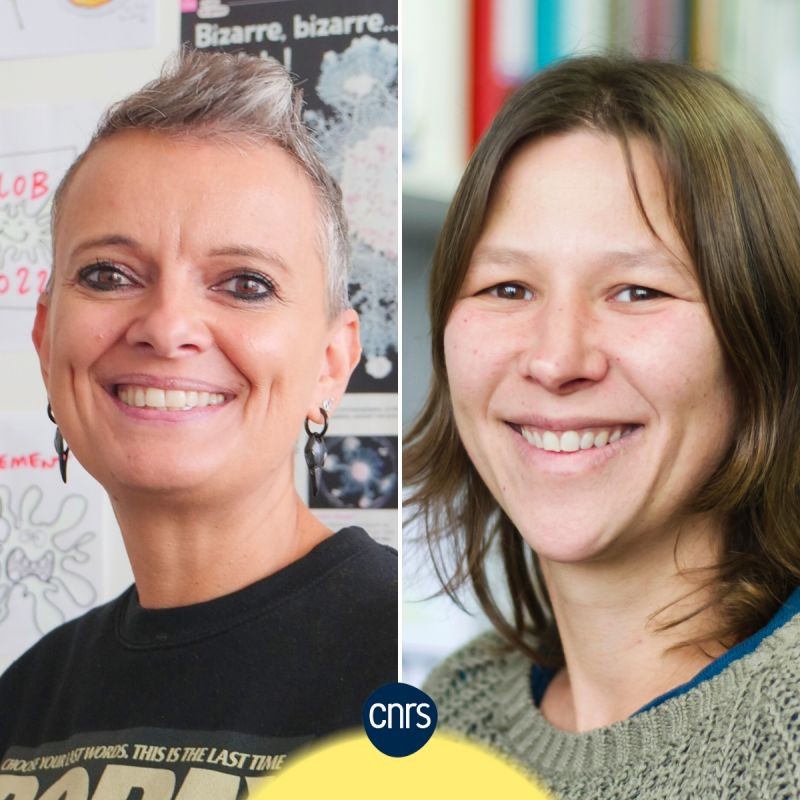
How is a sensory organ constructed during embryonic development? Julie Batut and her team, Marie Zilliox, David Sanchez, Pascale Dufourcq, Frédérique Gaits-Iacovoni, Anne Pizzoccaro and Patrick Blader (MCD-CBI), and their collaborators Christian Rouviere (CBI), Gaelle Letort (Institut Pasteur) and Violaine Roussier-Michon (INSA Toulouse), have shown, by combining mathematical modelling and experimentation on zebrafish, that the formation of the olfactory organ is based on molecular signals that are finely regulated in time and space.
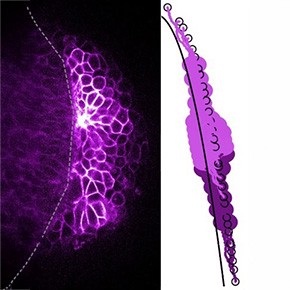
For sensory organs to function, their cells must be generated in the right place at the right time and have the right identity (the right ‘type’ of cell). In zebrafish embryos, an area called the ‘olfactory placode’ is responsible for the formation of the olfactory organ.
Studying its development provides a better understanding of the mechanisms that control the formation and functioning of sensory organs.