Laboratory

Team

Email

Phone

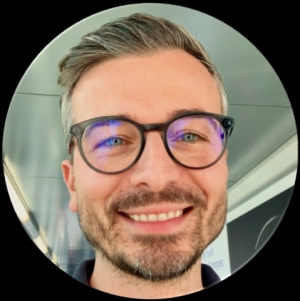
Photo du membre

Biography

I am a cell biologist and tenured CNRS researcher leading an independent research group exploring how mechanical forces regulate cell and tissue dynamics in the intestinal epithelium. My research aims to uncover how physical forces shape epithelial renewal, barrier integrity, and tissue homeostasis in the mammalian gut.
After graduating in Molecular Biology and Physiology from the University of Belgrade (Serbia), I pursued a PhD in Cell Biology at the University of Ulm (Germany) under the supervision of Prof. Götz von Wichert. There, I developed a strong interest in quantitative imaging approaches to study cellular dynamics, particularly cell migration and membrane trafficking.
Following my PhD, I carried out a postdoctoral fellowship at the University of Oxford (UK) with Prof. Mark Howarth, where I applied protein nanotechnologies to track receptor dynamics in cellular protrusions using advanced live-cell imaging. In 2013, I joined the laboratory of Dr Danijela Vignjevic at the Institut Curie (France), where I developed novel in vivo imaging approaches to study epithelial cell migration in the mouse small intestine and demonstrated that active cell migration is a critical driver of epithelial renewal in the mammalian gut.
In 2020, I was awarded the ATIP-Avenir Junior Group Leader grant to investigate the mechanoregulation of epithelial renewal in the mammalian intestine. The same year, I was selected in the group leader call at the Centre de Biologie Intégrative (CBI) in Toulouse, where I established my independent research group in 2021. I was subsequently recruited as a tenured CNRS researcher (Chargé de recherche).
My group (MechanoGut) integrates quantitative live imaging, genetic models and organoids to uncover how physical forces shape epithelial dynamics in both homeostasis and disease. 

Highlights of Recent Work 

bioRxiv preprint (2025) 
Demonstrates that goblet cells generate local mechanical stress that induces junctional fractures in enterocytes, highlighting cell heterogeneity as an intrinsic mechanical feature of gut homeostasis. 

bioRxiv preprint (2025) 
Shows that luminal distension in the colon triggers myosin II–dependent reinforcement of cell junctions in vivo, protecting the epithelium from mechanical failure. 

Current Biology (2025) 
Reveals how Arp2/3 complex supports epithelial integrity under mechanical stress in the small intestine. 

Science (2019) 
Intestinal epithelial renewal relies on active cell migration rather than passive displacement, redefining mechanisms of tissue turnover in vivo. 

This work was highlighted in the following publications: 

Biography 

Je suis biologiste cellulaire, chargé de recherche CNRS et responsable d’équipe, et j’étudie comment les dynamiques cellulaires et tissulaires sont régulées par des mécanismes mécaniques dans l’épithélium intestinal. Mes travaux visent à comprendre comment les forces physiques façonnent le renouvellement épithélial, l’intégrité de la barrière et l’homéostasie tissulaire dans l’intestin des mammifères.
Après une formation en biologie moléculaire et physiologie à l’Université de Belgrade (Serbie), j’ai réalisé un doctorat en biologie cellulaire à l’Université d’Ulm (Allemagne), sous la direction du Pr Götz von Wichert. J’y ai développé un fort intérêt pour les approches d’imagerie quantitative appliquées à l’étude des dynamiques cellulaires, notamment la migration cellulaire et le trafic membranaire.
À l’issue de mon doctorat, j’ai effectué un postdoctorat à l’Université d’Oxford (Royaume-Uni) dans l’équipe du Pr Mark Howarth, où j’ai utilisé des nanotechnologies protéiques pour suivre la dynamique des récepteurs dans les protrusions cellulaires par imagerie en cellules vivantes. En 2013, j’ai rejoint le laboratoire de la Dre Danijela Vignjevic à l’Institut Curie (France), où j’ai développé de nouvelles approches d’imagerie in vivo pour étudier la migration des cellules épithéliales dans l’intestin grêle murin et démontré que la migration cellulaire active constitue un moteur essentiel du renouvellement épithélial chez les mammifères.
En 2020, j’ai obtenu le financement ATIP-Avenir pour jeunes équipes afin d’étudier la mécanorégulation du renouvellement épithélial dans l’intestin des mammifères. La même année, j’ai été sélectionné lors de l’appel à candidatures pour la création d’équipe au Centre de Biologie Intégrative (CBI) à Toulouse, où j’ai fondé mon équipe indépendante en 2021. J’ai ensuite été recruté comme chargé de recherche titulaire au CNRS.
Mon équipe (MechanoGut) combine imagerie quantitative en cellules vivantes, modèles génétiques et organoïdes afin de décrypter comment les forces physiques façonnent les dynamiques épithéliales en situation d’homéostasie comme en contexte pathologique. 

Highlights of Recent Work 

bioRxiv preprint (2025) 
Demonstrates that goblet cells generate local mechanical stress that induces junctional fractures in enterocytes, highlighting cell heterogeneity as an intrinsic mechanical feature of gut homeostasis. 

bioRxiv preprint (2025) 
Shows that luminal distension in the colon triggers myosin II–dependent reinforcement of cell junctions in vivo, protecting the epithelium from mechanical failure. 

Current Biology (2025) 
Reveals how Arp2/3 complex supports epithelial integrity under mechanical stress in the small intestine. 

Science (2019) 
Intestinal epithelial renewal relies on active cell migration rather than passive displacement, redefining mechanisms of tissue turnover in vivo. 

This work was highlighted in the following publications: