Team
Team leader: Galupa Rafael
Presentation
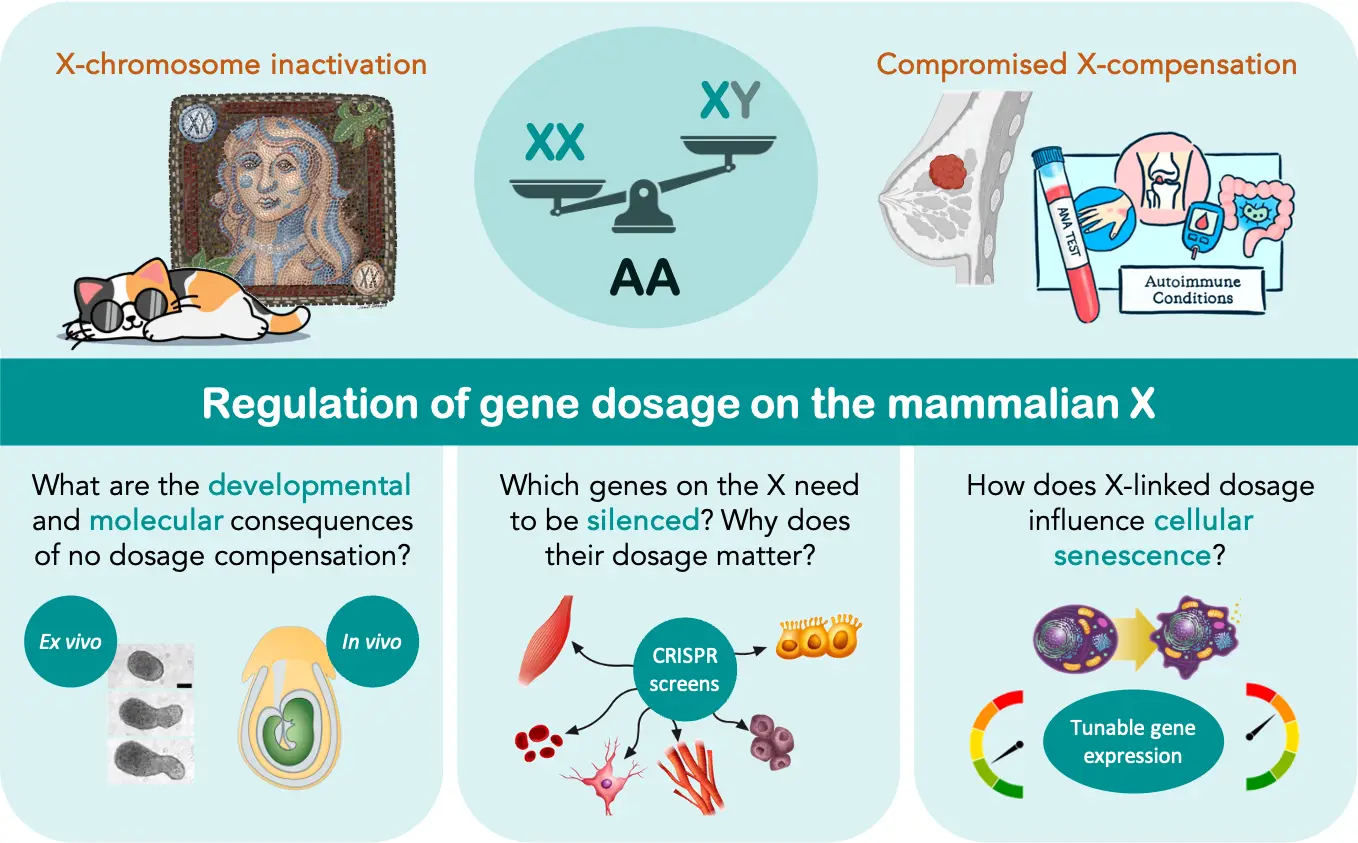
The goal of the team is to decipher molecular mechanisms that help cells “do maths” during development – after all, cells are able to interpret numerical information, like the number of chromosomes in their nucleus or the gradients of morphogens in the extracellular space, and then “make” decisions based on that, such as which cell types to become. In particular, the team focuses on how cells sense and interpret differential gene dosage, i.e., the number of copies of a gene in the genome. This includes studying the mammalian X chromosome, which is most often present in either one or two copies in the nucleus, in XY or XX cells, respectively. This difference has had important implications during the evolution of mammals, including the emergence of a dosage compensation mechanism – X-chromosome inactivation – in XX individuals. As model systems, we use mouse embryonic stem cells and mouse embryos, following the ethical considerations associated with them, as well as human cell lines.
Project 1
Rafael Galupa, CRCN CNRS
Benoit Augé-Duboé, IgE HC, UT
Daniela Cecalev, PhD student
Praveenan Somasundaram, PhD student
Arsenia Massinga Macuacua, PhD student
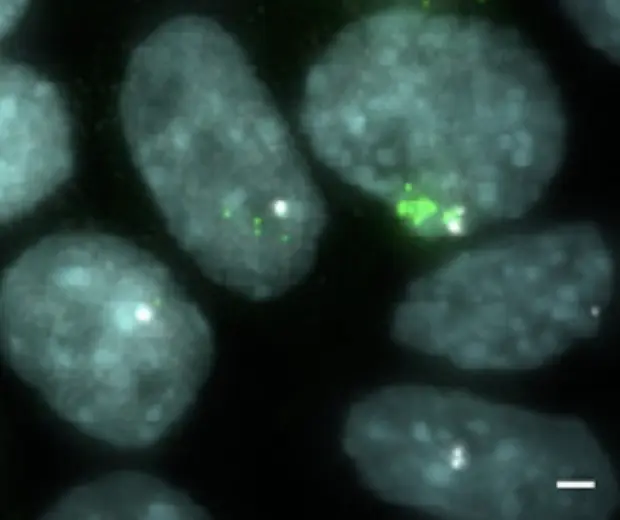
We aim to identify dosage-sensitive genes on the X chromosome, combining CRISPR epigenetic screens with approaches to modulate gene expression levels. We are particularly interested in the genes that require strict silencing on the inactive X chromosome, otherwise leading to defects in development and/or homeostasis.
Project 2
Rafael Galupa, CRCN CNRS
Benoit Augé-Duboé, IgE HC, UT
Mélanie Pailles, Postdoc
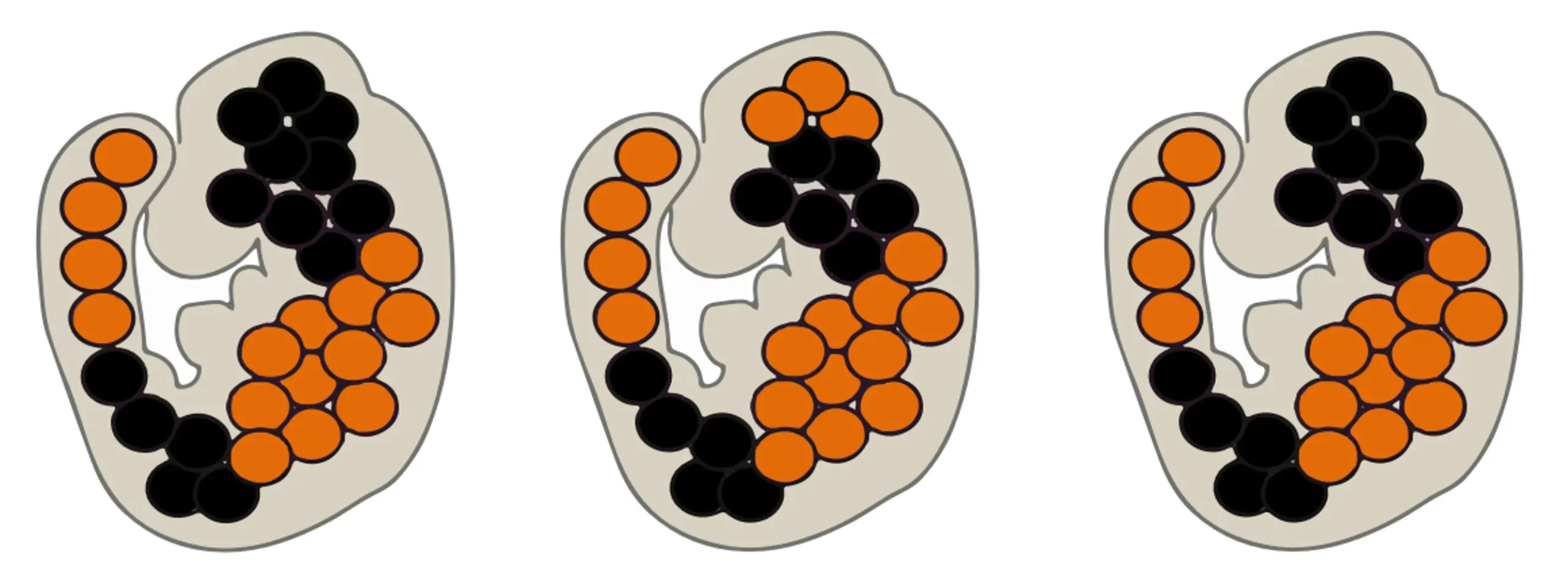
We are studying the molecular and developmental consequences of the absence of X-linked dosage compensation in embryonic lineages, both ex vivo and in vivo.
Project 3
Rafael Galupa, CRCN CNRS
Estelle Nicolas, CRCN INSERM
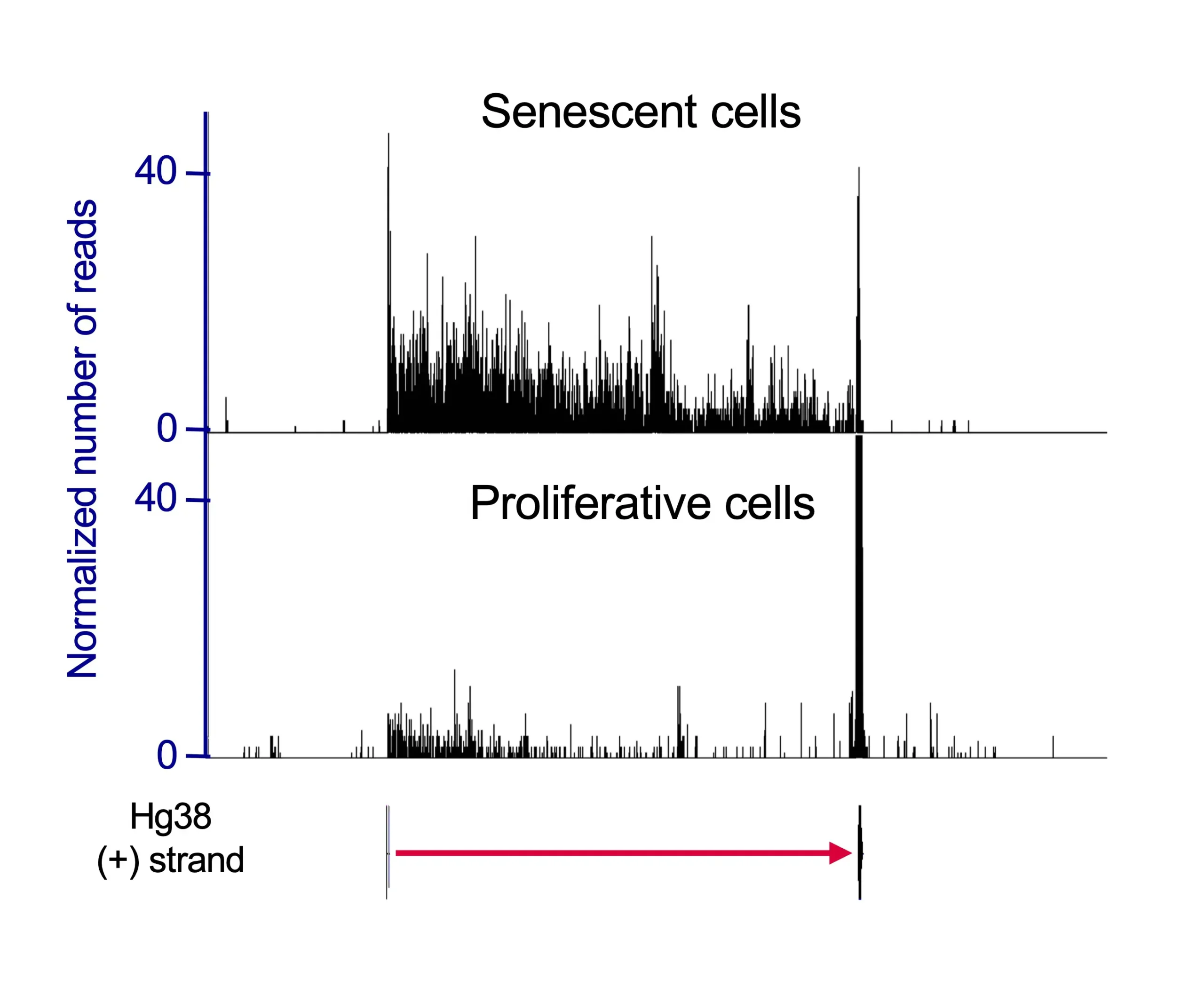
Cellular senescence is a stable proliferation arrest with beneficial functions such as in embryonic development or as an anti-cancer barrier. On the other hand, accumulation of senescent cells is involved in detrimental effects during aging. We are exploring how the correct dosage of X-linked genes is critical to regulate cellular senescence, using several models of senescence in human cells.
Team members
– Regulation and compensation of gene dosage on the mammalian X
Cecalev D, Viçoso B and Galupa R. Development (2024) 151, dev202891, doi.org/10.1242/dev.202891
– Enhancer architecture and chromatin accessibility constrain phenotypical space during Drosophila development
Galupa R, Alvarez-Canales G*, Borst NO*, Fuqua T*, Gandara L*, Misunou N*, Richter K*, Alves MRP, Karumbi E, Perkins ML, Kocijan T, Rushlow CA and Crocker J. Dev Cell (2023) 58(1): 51-62, doi.org/10.1016/j.devcel.2022.12.003
– Inversion of a topological domain leads to restricted changes in its gene expression and affects inter-domain communication
Galupa R* , Picard C*, Servant N, Nora EP, Zhan Y, van Bemmel JG, Zhan Y, El Marjou F, Johanneau C, Borensztein M, Ancelin K, Giorgetti L and Heard E. *Equal contribution Development (2022) 149 (9): dev200568, doi.org/10.1242/dev.200568
– Circular ANRIL isoforms switch from repressors to activators of p15/CDKN2B expression during RAF1 oncogene-induced senescence.
Muniz L, Lazorthes S, Delmas M, Ouvrard J, Aguirrebengoa M, Trouche D#, and Nicolas E#. #Equal contribution
RNA Biol (2021) 18, 404-420., doi.org/10.1080/15476286.2020.1812910
– A conserved noncoding locus regulates random monoallelic Xist expression across a topological boundary
Galupa R, Nora EP*, Hunt RW*, Picard C*, Gard C, van Bemmel JG, Servant N, Zhan Y, El Marjou F, Johanneau C, Diabangouaya P, Le Saux A, Lameiras S, Fonseca J, Loos F, Gribnau J, Baulande S, Ohler U, Giorgetti L and Heard E. Mol Cell (2020) 77: 352-367, doi.org/10.1016/j.molcel.2019.10.030
– The bipartite TAD organization of the Xic ensures opposing developmental regulation of Tsix and Xist
van Bemmel JG*, Galupa R*, Gard C, Servant N, Picard C, Davies J, Szempruch AJ, Zhan Y, Zylicz JJ, Nora EP, Lameiras S, Gentien D, Baulande S, Giorgetti L, Guttman M, Hughes JR, Higgs DR, Gribnau J and Heard E. *Equal contribution Nat Gen (2019) 51: 1024-1034, doi.org/10.1038/s41588-019-0412-0
– Control of Gene Expression in Senescence through Transcriptional Read-Through of Convergent Protein-Coding Genes.
Muniz L*, Deb MK*, Aguirrebengoa M, Lazorthes S, Trouche D#, and Nicolas E#. *,# Equal contribution
Cell Rep (2017) 21, 2433-2446, doi.org/10.1016/j.celrep.2017.11.006
– A vlincRNA participates in senescence maintenance by relieving H2AZ-mediated repression at the INK4 locus.
Lazorthes S, Vallot C*, Briois S*, Aguirrebengoa M, Thuret JY, Laurent GS, Rougeulle C, Kapranov P, Mann C, Trouche D#, Nicolas E#. *,# Equal contribution
Nat Commun (2015) 6, 5971, doi.org/10.1038/ncomms6971
Affiliation