The intestine must facilitate the exchanges necessary for the body while maintaining a protective barrier. Using mouse models, supplemented by organoids and observations in human tissue samples, Denis Krndija and his team – Justine Creff, Sandra Bernat-Fabre, Salomé Neuvendel, Vishnu Krishnakumar, and Dhriti Saumya (MCD-CBI) – together with Thomas Mangeat (CBI) and their collaborators, have shown that mucus-producing cells can exert pressure on their neighbors and locally weaken their junctions. These findings reveal the role of mechanical forces in the integrity of the intestinal barrier.
The intestinal epithelium forms the body’s largest mucosal surface and is a major interface with the environment. In constant contact with food, microorganisms in the microbiota, and numerous chemical substances, it is also subject to mechanical stresses associated with intestinal function. Its integrity depends on cell junctions that ensure cohesion between cells and limit the uncontrolled passage of substances or microorganisms through the intestinal wall.
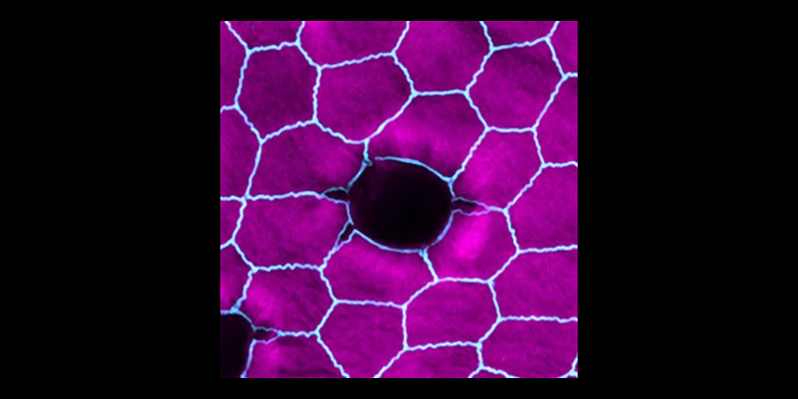
This epithelium is composed of several cell types with different functions and morphologies: enterocytes (which are more numerous), which play a major role in this barrier function, and goblet cells (which are less numerous), which are interspersed among them.
To understand how the differences in shape and volume between enterocytes and goblet cells influence the mechanical organization of the epithelium, scientists combined high-resolution three-dimensional imaging, biophysical analyses, and several experimental models.
This research has led to the proposal of a new mechanical model of the intestinal barrier in which goblet cells—which are essential for protecting the intestine through mucus production—constitute, due to their unique morphology, potential points of mechanical weakness in the epithelium and could contribute to the disruption of the intestinal barrier in certain infectious or inflammatory contexts.
Latest news