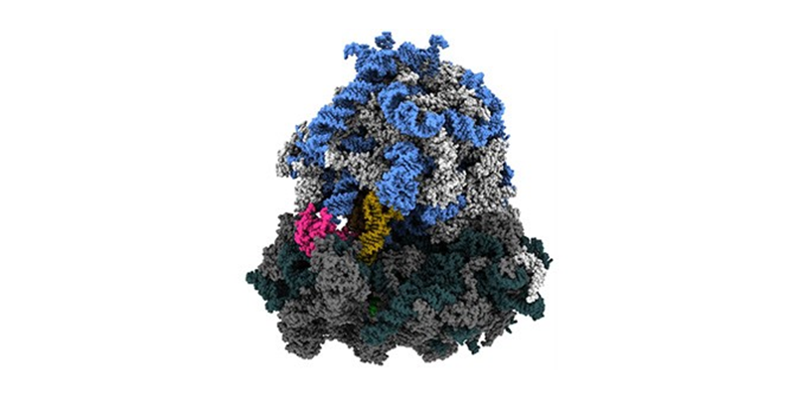
Ribosomes are the molecular machines that translate messenger RNA into proteins. Mutations in their components are frequently found in many cancers, although their role in tumor development has not been clearly established. Célia Plisson-Chastang, her team, Anaïs Astier, Paulo E. Santo, Dana Rinaldi, Laura Plassart, Simon Lebaron and Clément Chapat (MCD-CBI) and their collaborators reveal how mutations in a ribosomal protein associated with chronic lymphocytic leukemia (CLL) disrupt cell function.
Using a “multi-omic” approach, the scientists found that mutations in the ribosomal protein Rps15—frequently associated with cases of CLL— lead to a significant impairment in translation efficiency.
Furthermore, structural characterization via cryo-EM and single-particle analysis shows that Rps15 mutations destabilize the protein’s structure within the ribosome, as if a crucial part of the ribosomal machinery were loosely attached. As a result, the mutant ribosomes “hesitate” or “stutter” on certain sequences of the genetic code, disrupting the production of specific proteins. This study reveals that mutant ribosomes do not merely malfunction, but also alter the nature of the genes that are expressed, leading to a change in the fate of the cells.
This research opens a new avenue for understanding how abnormalities in the protein “production line” can trigger or exacerbate cancers. It also suggests that specifically targeting mutant ribosomes (or the proteins whose production is impaired) could offer new therapeutic strategies.
Latest news