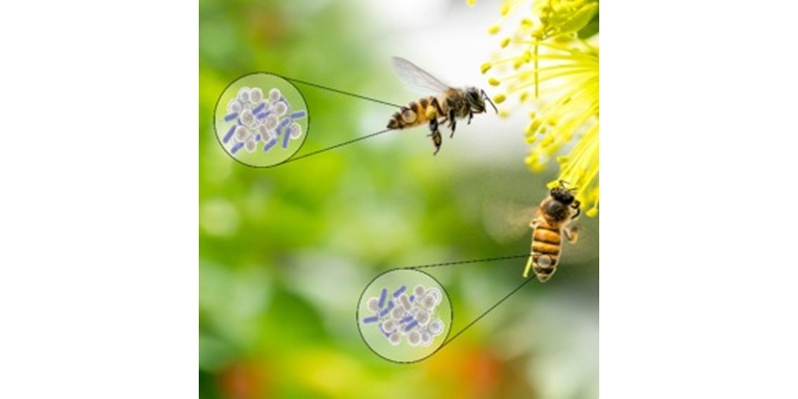
Gut bacteria work together to influence the cognitive abilities of bees.
In the microbiota as well, the collective takes precedence over the individual. Amélie Cabirol (CRCA-CBI) and her colleagues show that the effects of the gut microbiota on the brain depend on the microbial community as a whole, rather than on individual bacteria.
In honeybees, only those with a complete microbiota exhibit optimal learning and memory abilities. Neither individual bacteria nor partial microbiotas can replicate the performance observed with the entire microbiota. These observations suggest that interactions between microorganisms play a key role in the microbiota’s effects on the brain.
To understand the biological mechanisms involved, Amélie Cabirol and her colleagues also highlighted the role of tryptophan metabolism, which has already been implicated in microbiota-gut-brain communication in many species, including humans.
Beyond the bee model, this research reinforces a “systems-based” view of the microbiota and opens new avenues for understanding how microorganisms influence brain development and function.
In the longer term, it could contribute to the development of microbiome-based therapeutic strategies to improve the health of these essential pollinators, as well as to address cognitive and neurodevelopmental disorders in humans.